
Silica-based VIP technology
Ultra‑thin. Ultra‑efficient. Engineered for demanding thermal applications.
Engineered from the inside out
Silica-based Vacuum Insulation Panels (VIPs) deliver exceptional thermal performance in applications where conventional insulation reaches its limits. By combining a micro-porous silica core with advanced vacuum technology, Turvac solutions achieve high thermal efficiency while minimising insulation thickness.
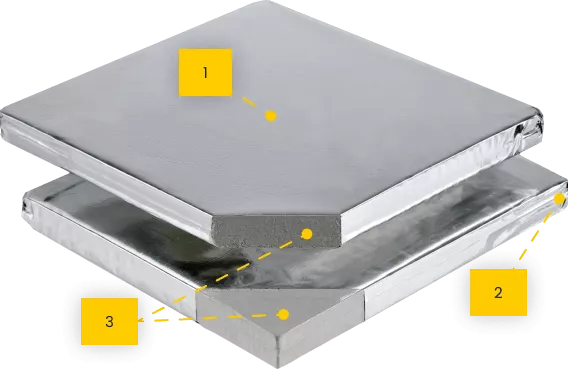
1. Protective foil bag: An advanced multi-layer barrier film helps maintain the vacuum, prevents moisture from getting into the panel and protects long-term performance.
2. Precision heat sealed seam: Specialised sealing technology helps preserve thermal performance throughout the product's service life.
3. Micro-porous silica core: The unique structure minimises heat transfer, enabling exceptional thermal insulation performance.
What makes silica-based VIPs different
Silica VIPs combine high thermal resistance, long service life, and excellent mechanical stability.
- Thermal conductivity of <0.0045 W/m·K
- Thickness reduction of up to 80% compared to traditional insulation
- Service life of over 25 years at standard conditions
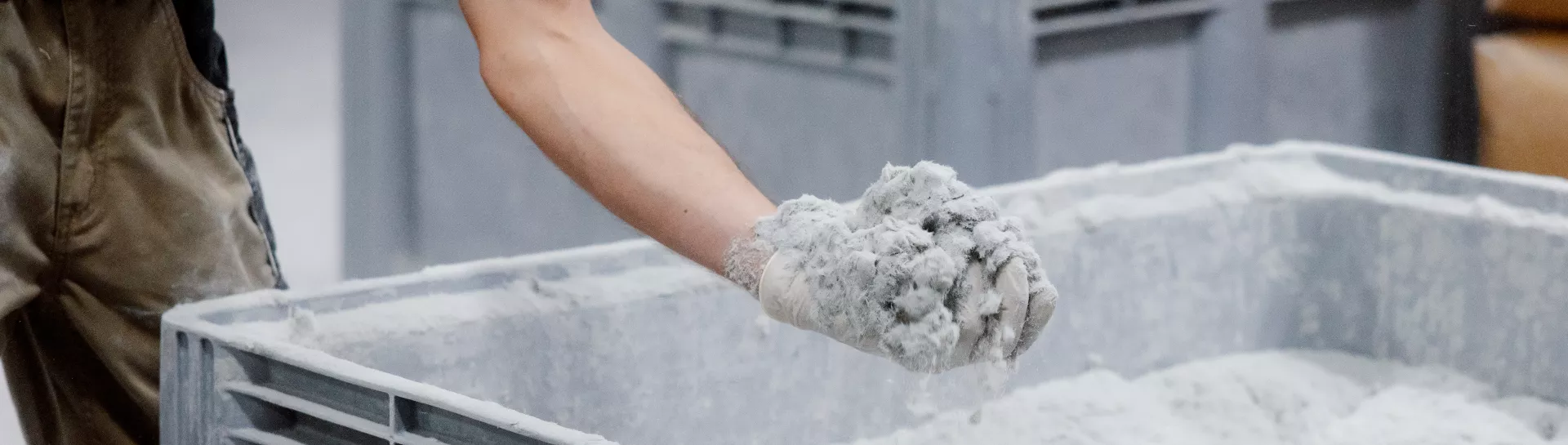
- Reusable fumed silica core that is compatible with circularity strategies
- Custom shapes and sizes for complex geometries
Silica is the industry’s benchmark core material because its micro‑porous structure minimises solid‑state heat transfer, even under vacuum.
So why silica?
Silica is the preferred core material for high-performance VIPs because it offers:
- Micro‑porous structure that minimises heat transfer
- High compressive strength for long-term stability
-
Low internal pressure increase over time
Silica VIPs maintain performance even under mechanical load, making them suitable for demanding industrial applications.
Handling and storage
The envelope, metallised foil of Turvac VIPs must not be damaged by drilling, cutting, milling, nailing, or any similar mechanical method, as this could compromise the vacuum integrity, resulting in the loss of its superior insulation properties.
The panels must be stored in dry conditions and protected from mechanical damage and direct sunlight.
Installation should be carried out on a clean surface to prevent mechanical damage to the VIP. If these conditions are challenging to meet, it is advisable to consider an alternative solution with an additional layer of protection such as XPS (Turvac Si Add ons), PIR (Deck-VQ), etc.